Carole Boston Weatherford & Jeffery Weatherford, author-illustrator, mother-son duo behind children's and young adult books: diverse, anti-racist nonfiction, biographies, poetry, historical fiction on African American heritage, culture, social justice. STEAM programs for K-12 and all ages.
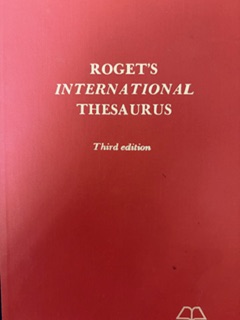
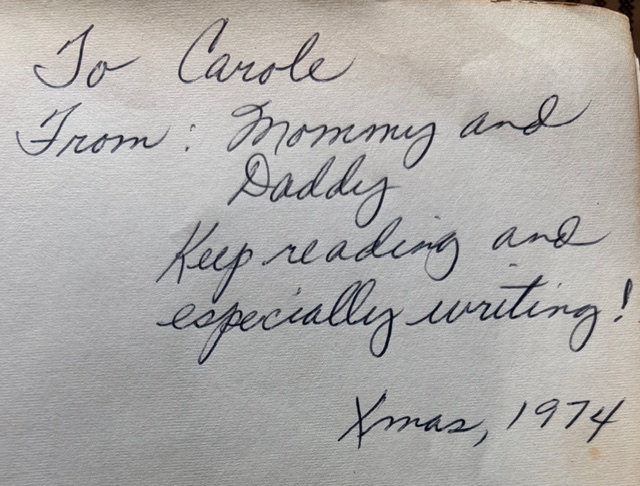
When I was a college freshman, my parents gave me Roget’s Thesaurus as a Christmas gift. The inscription is priceless, perhaps even prophetic. Years later, my father saw my first book published and saw me win a writer’s fellowship. My mother survived him by 27 years and joined me in celebrating each new book and honor.
When my parents became grandparents, they continued the book-giving tradition. Though intended for my children, three such gifts–Afro-Bets ABC Book, Afro-Bets 123 Book and Bright Eyes, Brown Skin; all from Just Us Books)–introduced me to a new, more diverse crop of children’s literature and inspired me to try my hand at writing for young people.
In this season of giving, consider books for the heart, mind, body and soul. My curated collection includes titles for almost anyone on your list.
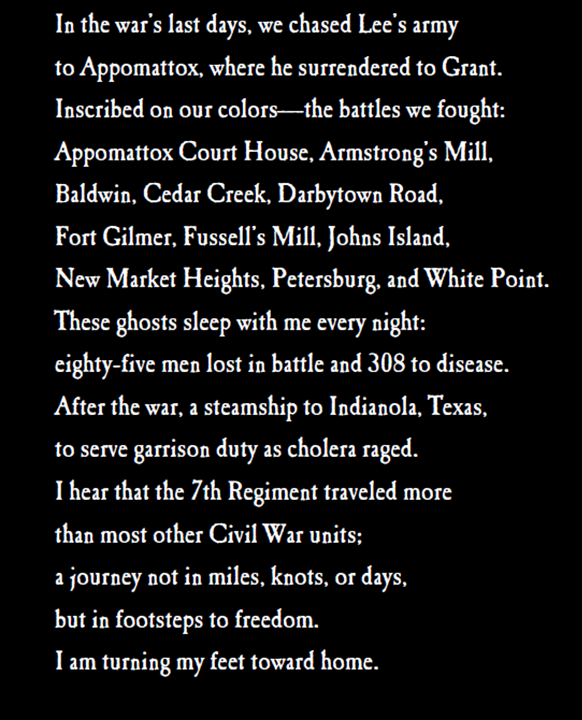
We honor veterans today with Jeffery’s rap tribute inspired by our verse novel, You Can Fly: The Tuskegee Airmen; his illustration of a member of the U.S. Colored Troops; and a poem about our forebear, Isaac Copper, U.S.C.T., from our family history, KIN: Rooted in Hope. To all veterans: Thank you for your service!
We’ve got a few more appearances before the holiday season: Arlington, Virginia; Pittsburgh, Pennsylvania; Washington, DC for the African American Civil War Museum Descendants Conference; and Denver, Colorado for National Council of Teachers of English conference. NCTE meets the week before Thanksgiving, so I’m planning ahead for my family feast. I’m prepping not only for the big meal but also to keep bellies full all weekend. These recipes are among my faves. What’s cooking at your house? Share in the comments section below.
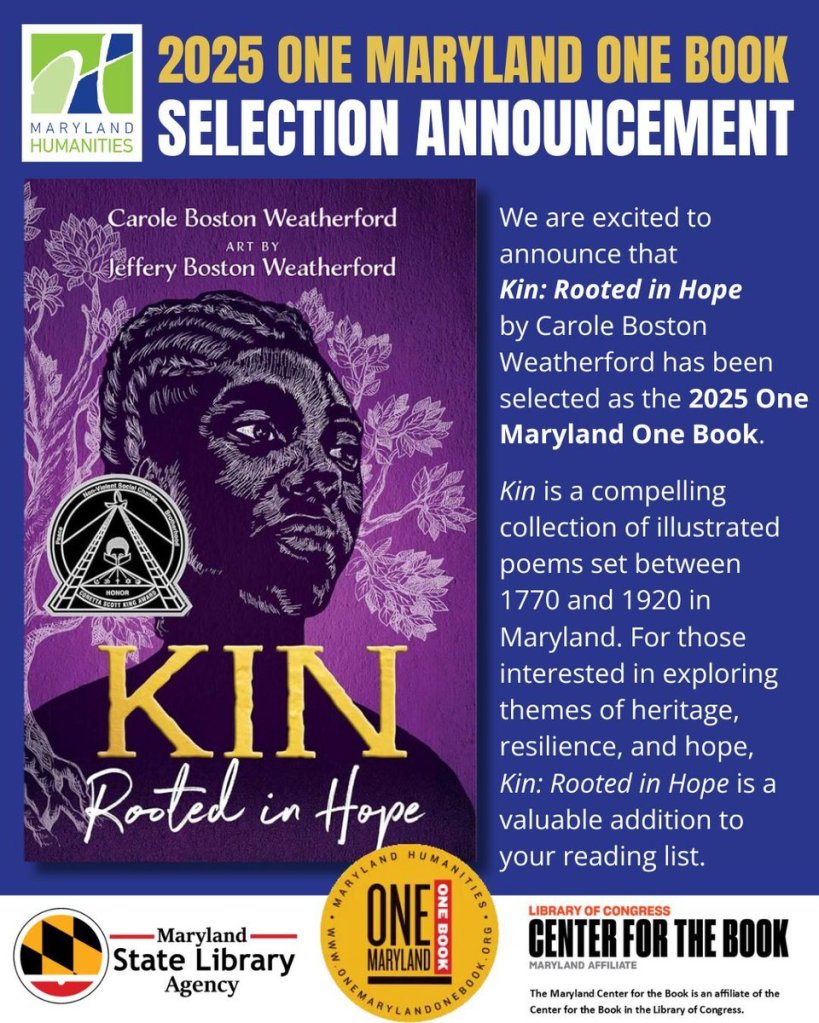
How fitting that our One Maryland One Book (OMOB) tour for Kin: Rooted in Hope coincided with Family History Month and Banned Books Week. Kin traces our family’s lineage to 1770 on the largest enslavement plantation in Maryland and to two all-Black Reconstruction era villages that they co-founded. Jeffery and I collaborated on the book in a quest that culminated with this epiphany.
Knowing your history is generational wealth.
The OMOB tour began at Riversdale House Museum in Riversdale, Maryland with a pop-up exhibition of Jeffery’s art from the book juxtaposed with furniture and artifacts throughout the one-time plantation. Together, we discussed the book and shared favorite poems.
The next stop was Chesapeake College in Wye Mills, Maryland on the Eastern Shore where the book is set. My dear friend, Harriette Lowery, a co-founder of the Frederick Douglass Honor Society, moderated the discussion which was livestreamed. A record crowd greeted us. We appreciate all the love.
Our busiest day–on Maryland’s Western Shore–included stops at the College of Southern Maryland in La Plata and St. Mary’s College of Maryland in St. Mary’s City. The reception at the College of Southern Maryland featured such local delicacies as quick-pickled watermelon rind. Delish! Here’s a recipe.
We ended the week at Morgan State University in my hometown–Baltimore. Thanks to the Department of English and Foreign Languages and new chair Dr. DeMaris Hill for hosting our appearance.
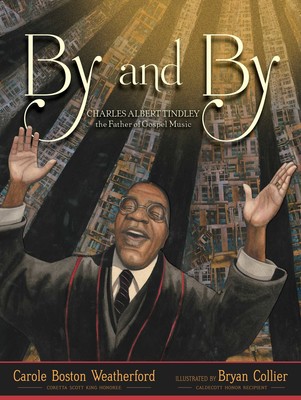
Although our official tour wrapped up, discussions of Kin continue across the state. Jeffery and I attended the Berlin Book Festival (Maryland, not Germany!). Berlin was the birthplace of the subject of By and By: Charles Albert Tindley, the Father of Gospel Music, my first collaboration with Bryan Collier. I dropped in on a book club meeting at Edenwald senior living community in Towson, and we both spoke at the Maryland Lynching Memorial Conference at the Reginald F. Lewis Maryland Museum of African American History and Culture.
We’re eager to discuss Kin in secondary schools and with book clubs. Download the Kin reading guide here.
Jeffery and I are so grateful that our ancestors reclaimed narratives will be amplified through KIN’s selection as the 2025 One Maryland One Book. We can almost feel our ancestors smiling down on us. Stay tuned for details of related activities. Thank you, Maryland Humanities.
When my first children’s book, Juneteenth Jamboree, debuted in 1995, it was the first picture book about Juneteenth. The first African-American holiday, Juneteenth commemorates June 19, 1865, the date in U.S. history when the last enslaved people were freed. For decades, the observance was regional to Texas and parts of Louisiana, Oklahoma and Kansas. Eventually, other areas joined the celebration. And, in 2021 Juneteenth became a federal holiday. Since 2020, Jeffery and I have kicked off summer with virtual and in-person Juneteenth celebrations–minus the barbecue.
Feast on these exciting programming options to engage young people all summer long.
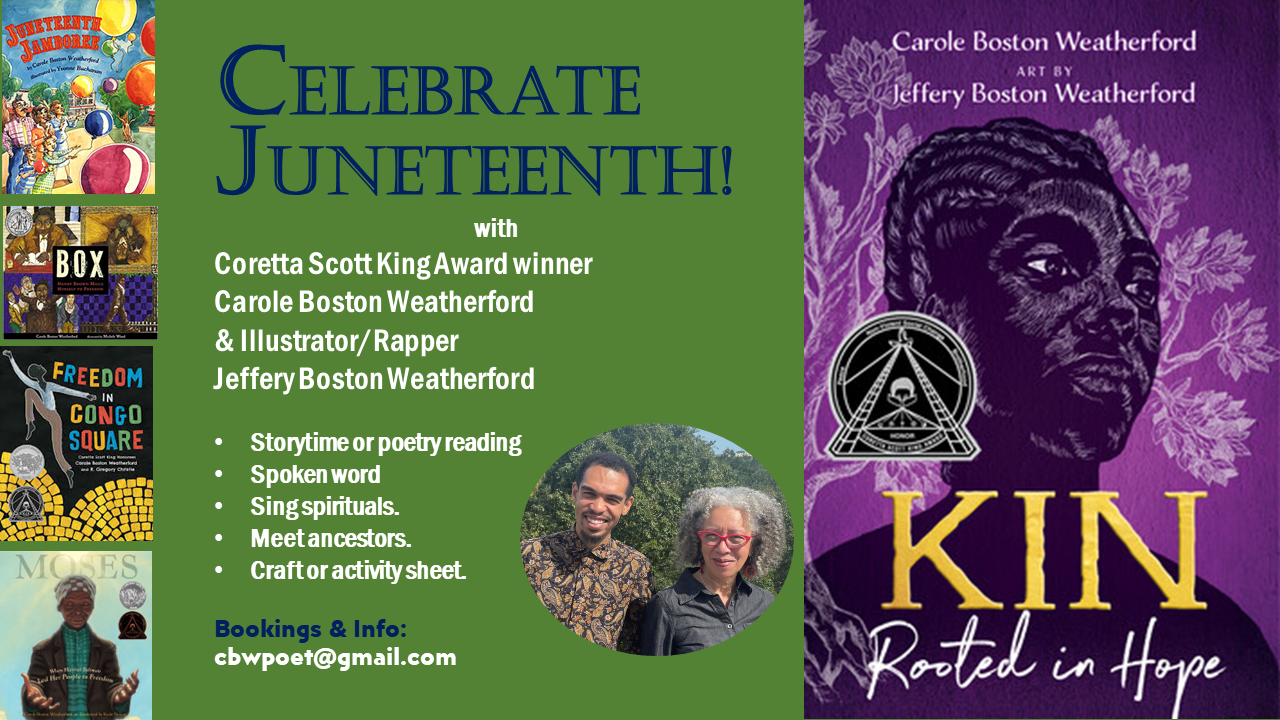
Juneteenth Jamboree
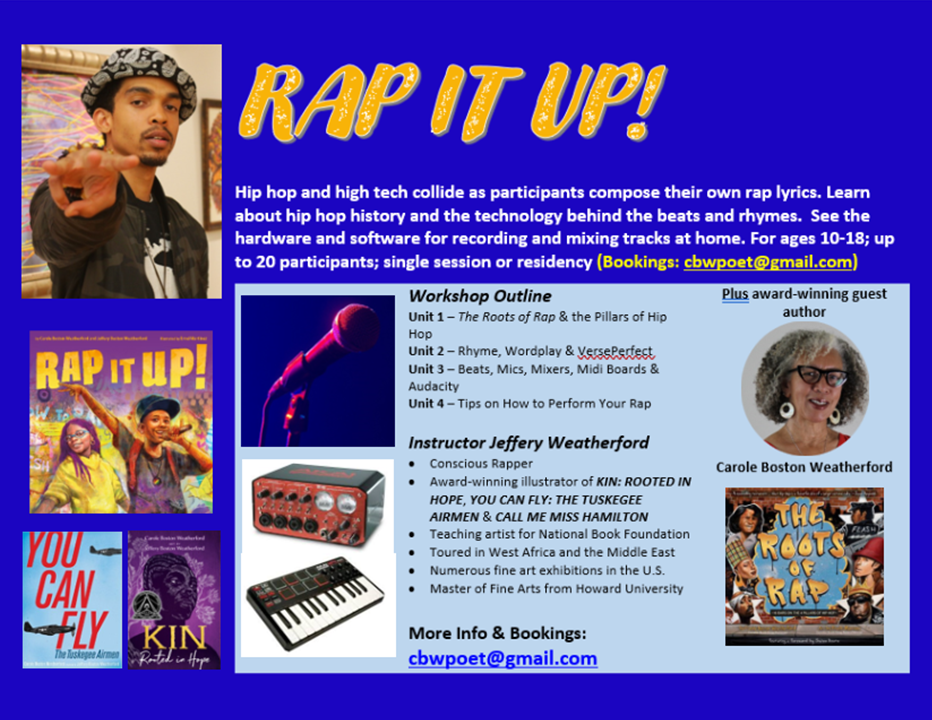
RAP IT UP!
KIN Genealogy Camp
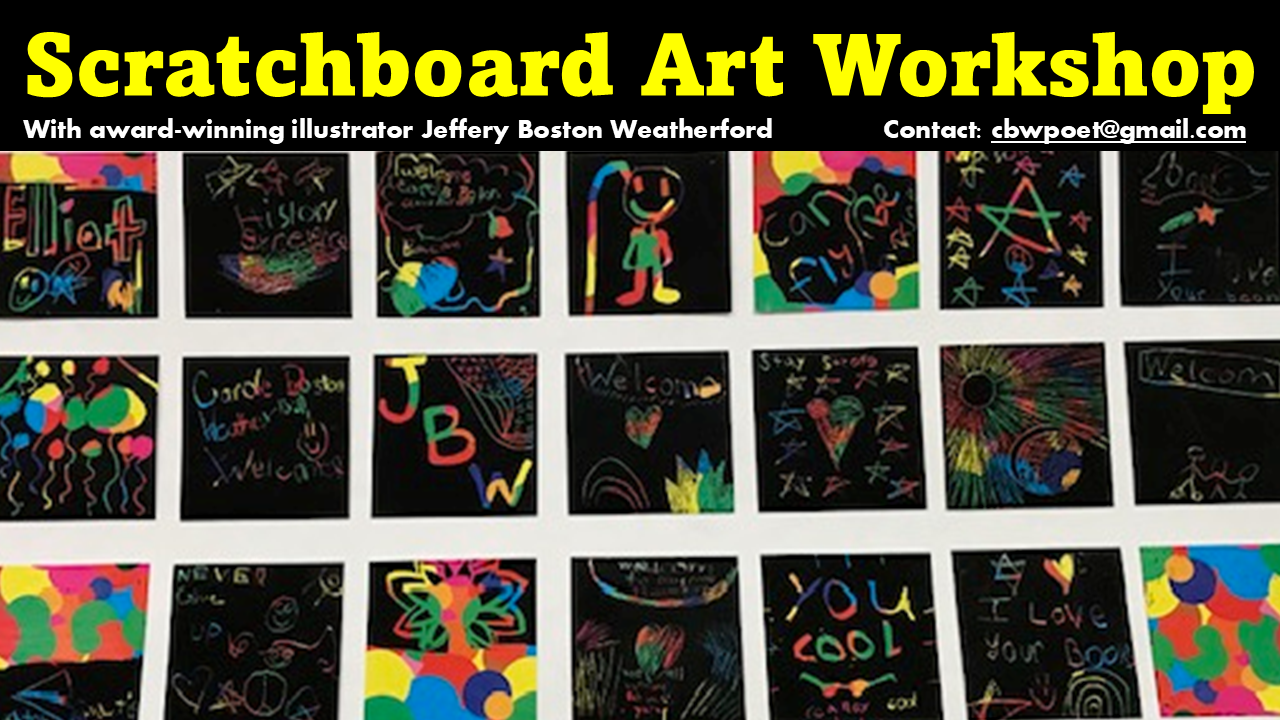
Scratchboard Art Workshop – Color your world with rainbow scratchboard
School Library Journal featured four award-winning family duos who collaborate on children’s books: the Roccos, the Pinkneys, the Pumphreys and us, the Weatherfords. We talk about the dynamics (and ground rules) of their creative partnerships. We are honored to be in such eloquent and illustrious company. Read the article here.
Jeffery and I not only create books together, but also take our “show” on the road to schools, libraries and cultural institutions. We’d love to visit your campus or community. We have books and programs that connect to the curriculum and commemorate the following observances:
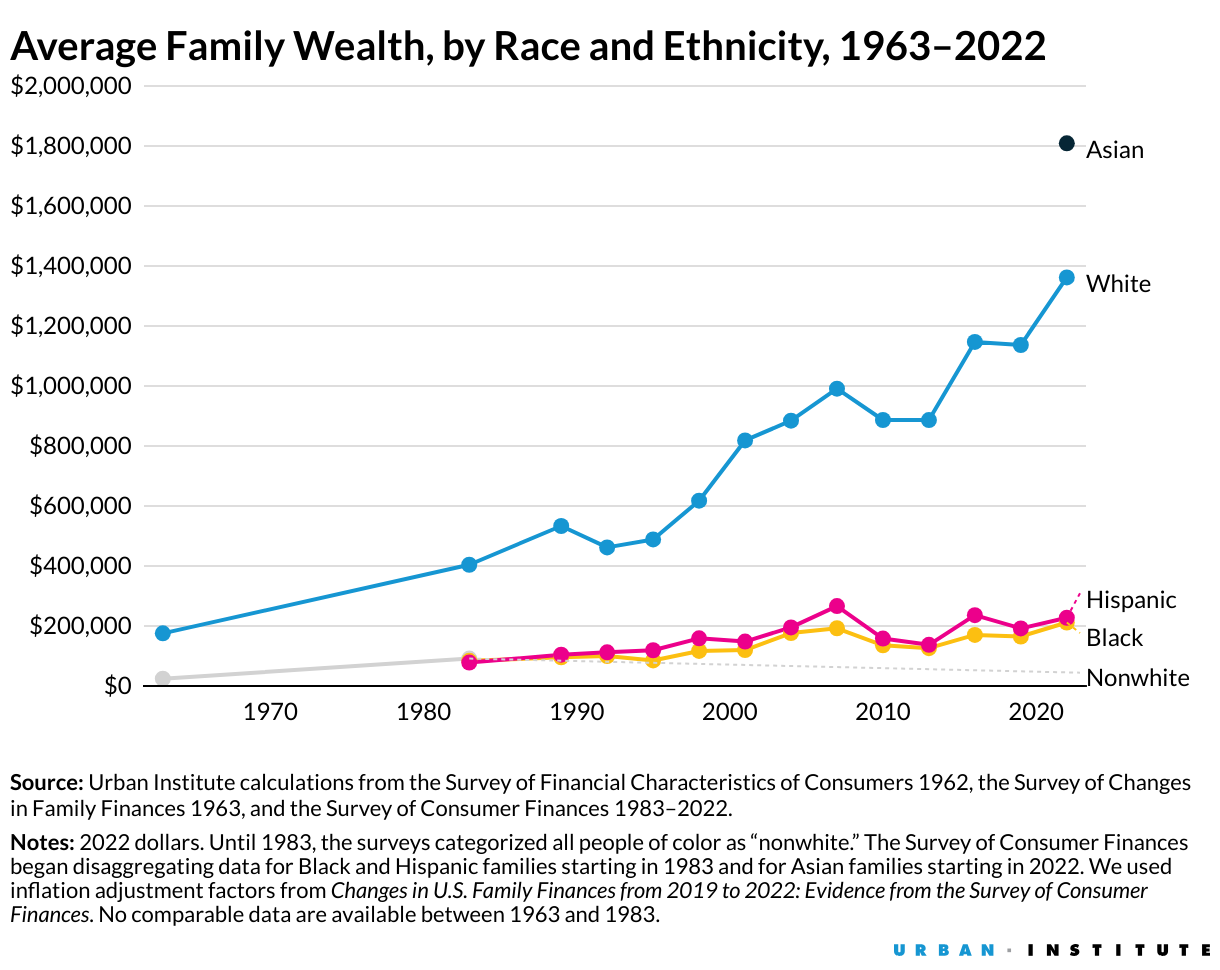
Part of my mission as an author is to ask critically relevant and often tough questions to uncover the past and connect it with our present experiences. One of these questions is: What is generational wealth?
When we think of generational wealth, most of us immediately consider financial inheritance—money, property, or businesses passed down through families. If your state is like mine, the comptroller issues an annual listing of unclaimed bank accounts. I check every year, to no avail. One can hope.
When we view wealth solely through a financial lens, though, we unintentionally exclude a significant portion of people, especially Black people, who were historically barred from accumulating wealth in traditional ways. From being exploited as free labor to being denied access to quality education and higher-paying jobs, Black Americans faced immense barriers to financial prosperity. While overcoming these barriers was not impossible, the achievement gap was often substantial.
Limiting wealth to a purely financial definition also blinds us to the wealth we already possess—in our bloodlines, in our stories. Through the journey of writing KIN: ROOTED IN HOPE, Jeffery and I began to broaden our understanding of generational wealth.
Access to the history of our enslaved ancestors is itself a form of generational wealth. Not because they were able to preserve their stories, but because their enslavers, in their cold calculus, kept detailed records of what they considered their “property.” These records allow us to trace the past, reclaim our heritage, and carry the strength of our ancestors with us.
Through poetry and art, in KIN, Jeffery and I explore these ideas of wealth, equity, and access. For us, telling my family’s story is part of a broader mission to expand the narrative of generational wealth beyond just financial capital and into the deeper, richer inheritance of identity, resilience, and hope.
This month, we celebrate the one-year anniversary of KIN: ROOTED IN HOPE. It’s been an incredible journey sharing my family’s story with the world, and I’m thrilled to announce the release of the paperback edition. I hope this new format will continue to bring these important stories to new readers and remind us all of the true wealth we carry in our roots. That wealth is yours to claim!
Download the KIN reading guide and ponder your own family’s wealth.
With 80 books, there’s a title for (almost) every season and observance, including Photography Month (May), Memorial Day, Black Music Month (June) and Juneteenth. Add to that books, activities and presentations for summer reading programs and Vacation Bible School (VBS!). It’s not too late to book the Weatherfords for late spring and summer.
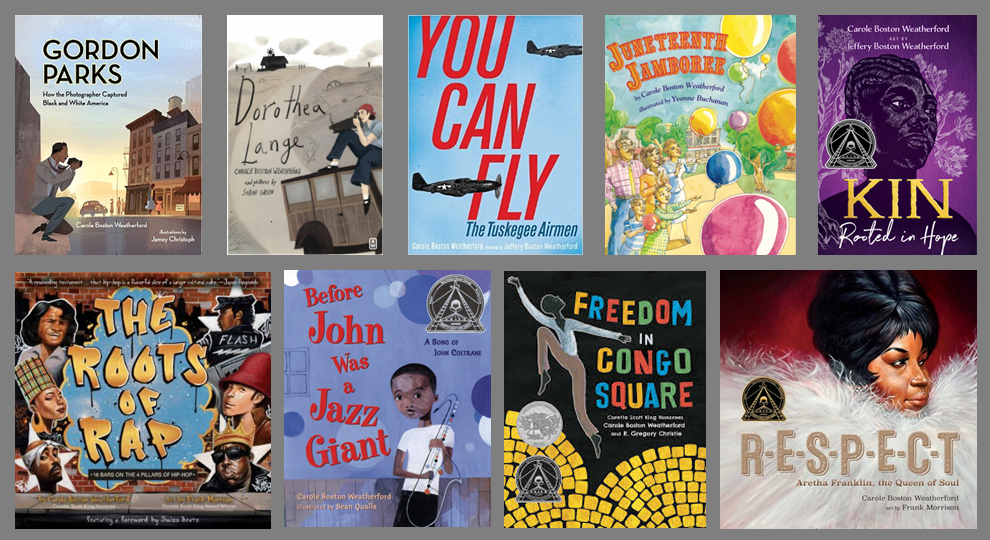
For Photography Month, Jeffery and I focus on Gordon Parks and Dorothea Lange and how primary source photographs figure into our historical research.
KICK-OFF SUMMER WITH A SALUTE & SONG
For Memorial Day, we honor military heroes with poems from YOU CAN FLY; THE TUSKEGEE AIRMEN and from KIN: ROOTED IN HOPE and a rousing rap from Jeffery saluting the pioneering Black WWII pilots.
On May 31 or June 1, I hope you will pause to remember Black Wall Street, the nation’s wealthiest Black business district, once located in Tulsa, Oklahoma’s Greenwood community, which, in 1921, was the scene of the nation’s worst incident of racial violence. UNSPEAKABLE: THE TULSA RACE MASSACRE, my 2021 collaboration with the late Floyd Cooper, tells that story.
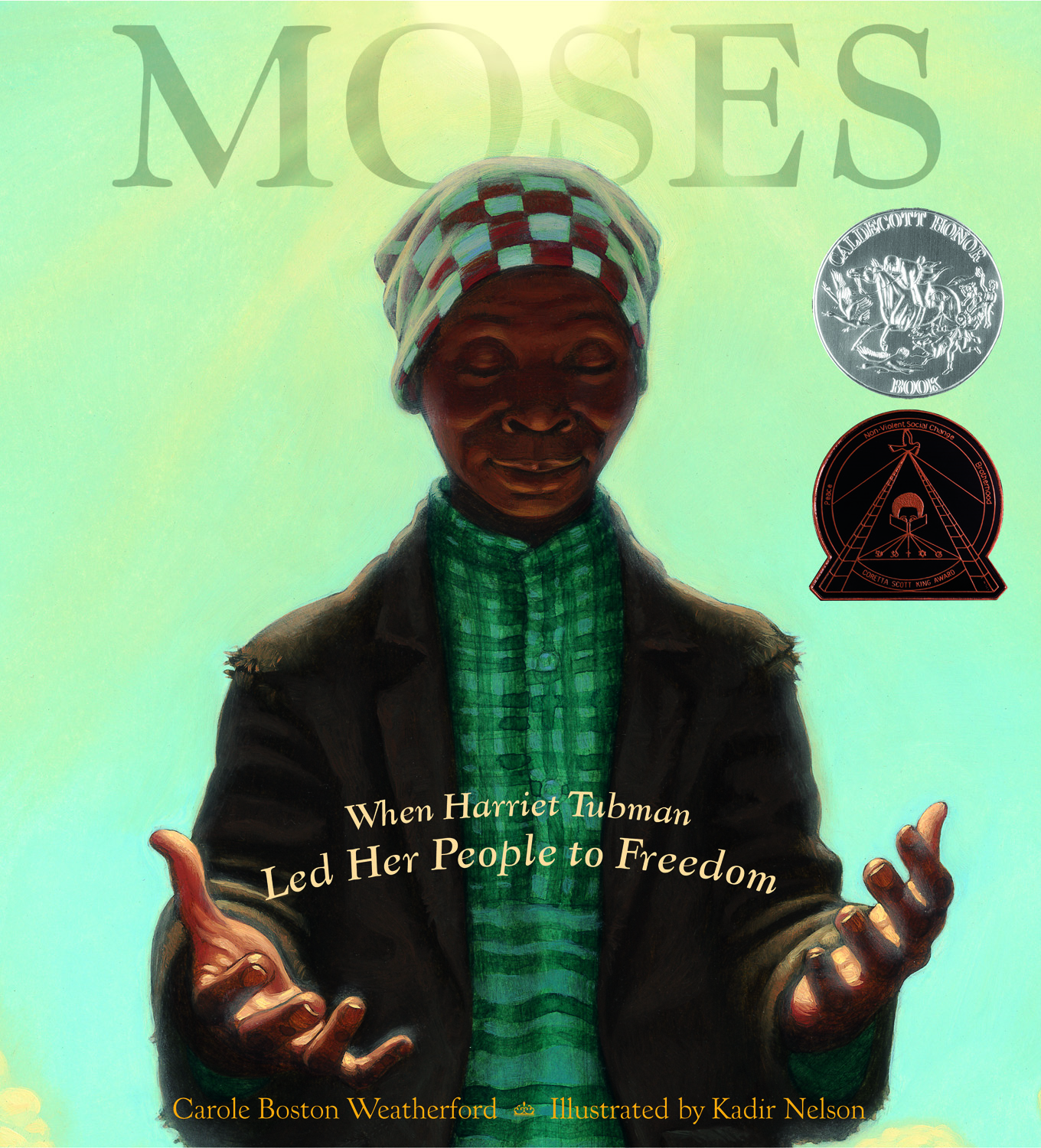
For the Juneteenth national holiday, Jeffery and I share stories of enslavement and emancipation from KIN: ROOTED IN HOPE, MOSES: WHEN HARRIET TUBMAN LED HER PEOPLE TO FREEDOM and JUNETEENTH JAMBOREE, the first children’s book about the first African-American holiday.
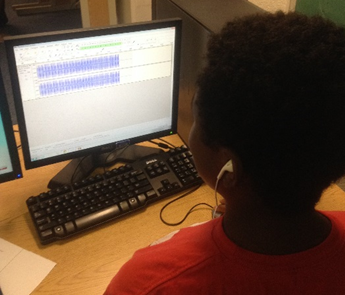
This summer Jeffery will again offer his popular Hip Hop Tech workshop, now known as RAP IT UP!–after our upcoming picture book collaboration. These transformative sessions get tweens and teens hyped about writing and performing original rap lyrics. A Petersburg, Virginia, workshop produced what has got to be thee dopest testimonial: “I can’t believe they let us get lit like that in the library! Believe it. Jeffery is already booked for a residency in Baton Rouge, Louisiana.
For Black Music Month, Jeffery and I tune in to African-American musical genres and musicians–from spirituals, blues, and gospel, to jazz, soul and rap. Yes, we got books for all that.
TAKING IT TO CHURCH!
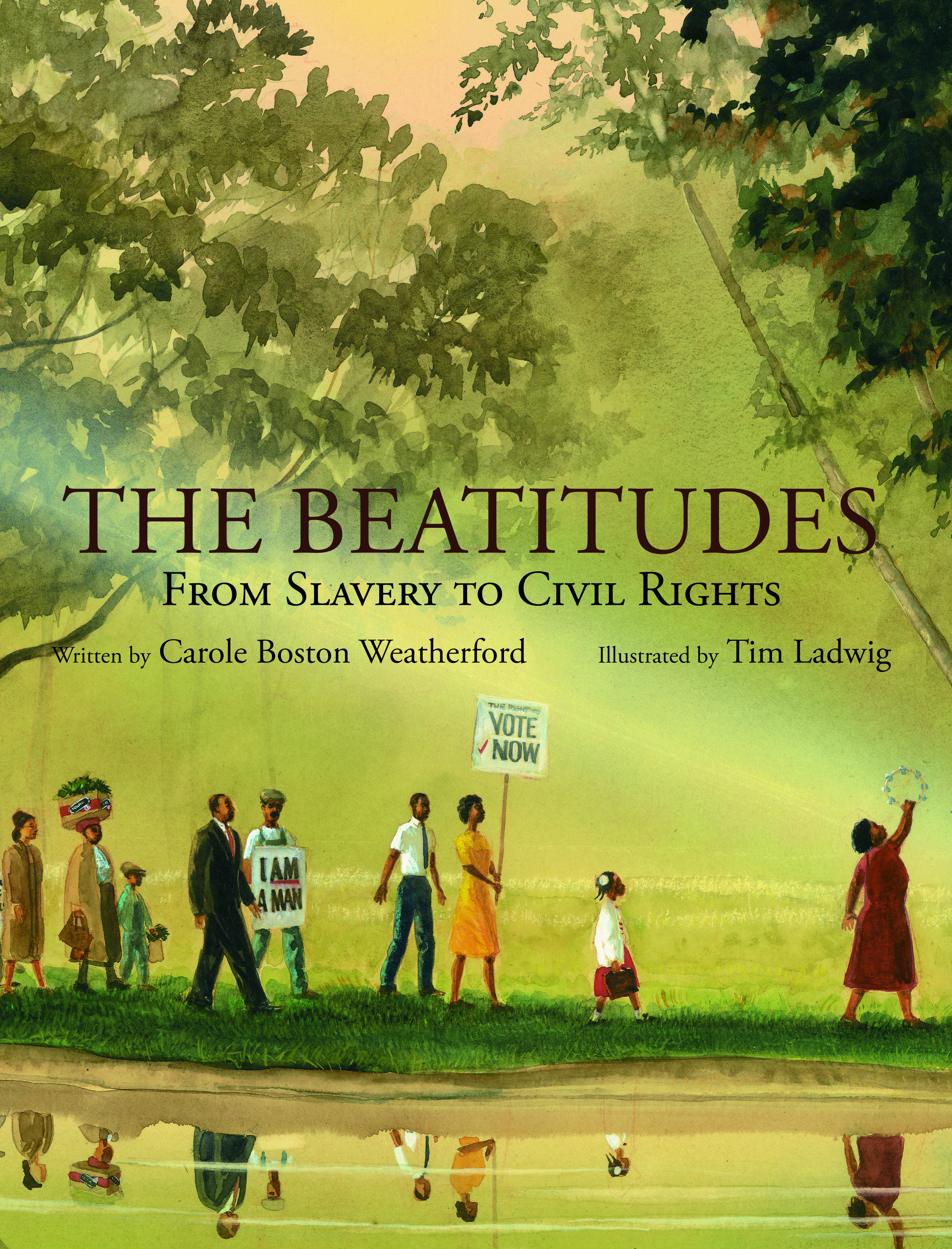
With book bans proliferating and Black history under attack, grassroots reading/study groups are needed more than ever. We encourage churches to host reading programs for all ages, but especially for children. Many of our titles are perfect for Vacation Bible School and for multigenerational audiences and discussions. Reading guides for many of these books are available as free downloads (more on that later). If your church literacy initiative uses our books, let us know. We may be available to join the discussion via Zoom. Here are some spirit-filled books to consider.
Group shots clockwise from top left: Jeffery and Carole greet family and friends after the KIN event in Easton, Maryland; BROS Day, a celebration hosted by the Chicago-based pop-up play space, Brown Books and Paintbrushes; at the Harriet Tubman Museum in Cambridge, Maryland; a student reading How Do You Spell Unfair? as part of the Dublin, California, One City/One Book project. The new picture book bios, Crown of Stories and Outspoken, release in April.
During Black History Month, Jeffery Boston Weatherford–my son and collaborator–and I took KIN: Rooted in Hope home to Talbot County, Maryland, where our newly freed forebears co-founded Reconstruction-era villages. Big hugs to librarian and event organizer Cindy Orban (top center in purple)–the best friend a book ever had. Thanks to the event sponsors, including Talbot County Free Library, The Country School, Avalon Theatre and Dorchester County Tourism Office. By the way, there’s now a KIN reading guide to accompany the Family Tree Activity sheet.
While in Easton, Maryland, we made what I am told was the largest donation statewide to the inaugural Maryland Commission on African American History & Culture Book Drive: board books–My Favorite Toy and Mighty Menfolk–for Talbot County’s toddlers.
Francis Scott Key by Jeffery Boston Weatherford from KIN (Atheneum).
Jeffery’s solo exhibition of prints from KIN—April 7 and through June at Baltimore’s Frederick Douglass-Isaac Myers Maritime Museum–will include the above portrait of Francis Scott Key. During the War of 1812, Key penned the Star Spangled Banner as bombs burst over Baltimore’s harbor. That same harbor made headlines recently when a 200-million-ton freighter slammed the Frances Scott Key Bridge, causing its collapse, six deaths and thousands of lost jobs. I pray for the families of the road crew who were killed. I pray that my hometown can bear this blow and that rebuilding will be swift. #MarylandTough #BaltimoreStrong
There’s still time to book us–the Weatherfords–for a school visit this spring. We also offer Juneteenth celebrations and summer programs, such as Jeffery’s popular Rap It Up hip-hop writing workshop for ages 10 to adult. And it’s not too early to book us for next school year.
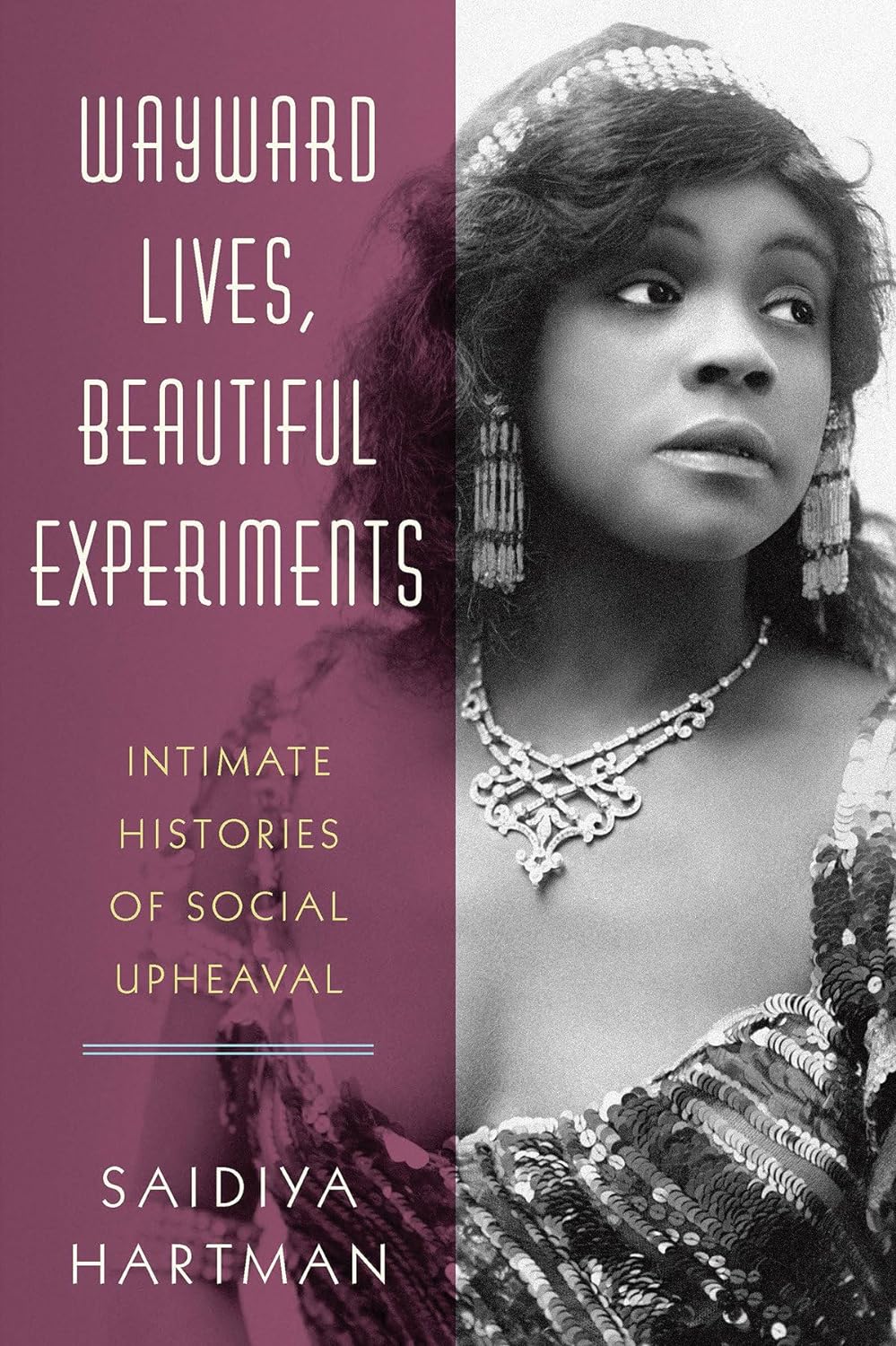
Last week, I was honored to participate in the SLJ webcast, “Fact-Finding and Black History,” a panel discussion with Amina Luqman-Dawson, Lesa Cline-Ransome and James Ransome, moderated by Marva Hinton. As we discussed how to navigate the challenges of researching Black history, I cited the term, “critical fabulation,” which was coined by MacArthur Fellow Saidiya Hartman, a cultural historian and Columbia University professor. I became acquainted with the term and with Hartman’s scholarship through her award-winning book, Wayward Lives, Beautiful Experiments: Intimate Histories of Riotous Black Gilrs, Troublesome Women, and Queer Radicals (2019). Critical fabulation uses storytelling and speculative narration to right history’s omissions, particularly of enslaved people.
My deepest dive into critical fabulation, however, was for the verse novel, KIN: Rooted in Hope, a collaboration with my son, illustrator Jeffery Boston Weatherford. In this family history, we conjure the voices, visages and vistas of our enslaved and newly emancipated ancestors and their contemporaries. As I was writing KIN, I stumbled upon Hartman’s Wayward Lives. Her explanation and application of critical fabulation freed me to reclaim my ancestor’s lost narratives. For that, I am grateful.