

Are you old enough to remember blackboards, chalk and dusty erasers? The teacher would enlist a student to wipe the blackboard so the next day began with a clean slate.
Well, history doesn’t work that way. The past is blood running through our veins, a wound festering in our heartland and a scar on our democracy. To heal, we must come clean. That means chronicling a truer and more complete history.
For three decades, I have spoken truth to young scholars and reclaimed lost or little known narratives from painful chapters of American history. Imagine my outrage that Black history is now being erased or, at best, revised to suit a regressive, repressive and oppressive agenda.
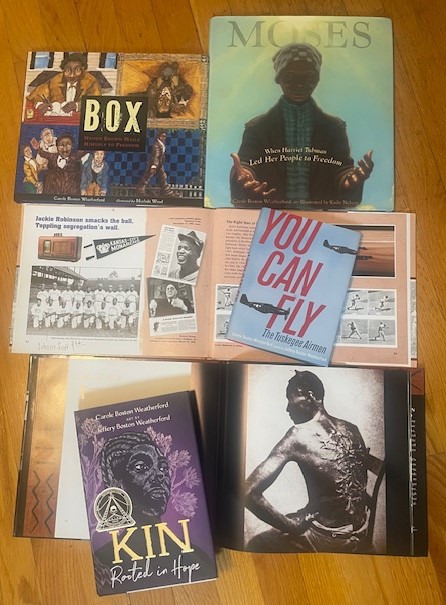
These books from my backlist touch on subjects targeted by current culture wars:
- Moses: When Harriet Tubman Led Her People to Freedom, ill. by Kadir Nelson (Harriet and enslavement)
- Box: Henry Brown Mails Himself to Freedom, ill. by Michele Woods (enslavement and the Underground Railroad)
- A Negro League Scrapbook (Jackie Robinson)
- You Can Fly: The Tuskegee Airmen, ill. by Jeffery Boston Weatherford (the Airmen)
- Kin: Rooted in Hope, ill. by Jeffery Boston Weatherford (enslavement)
- Remember the Bridge: Poems of a People (Out of Print–photo of Peter-Gordon with scarred back)
Where to turn to find a more complete history?
