
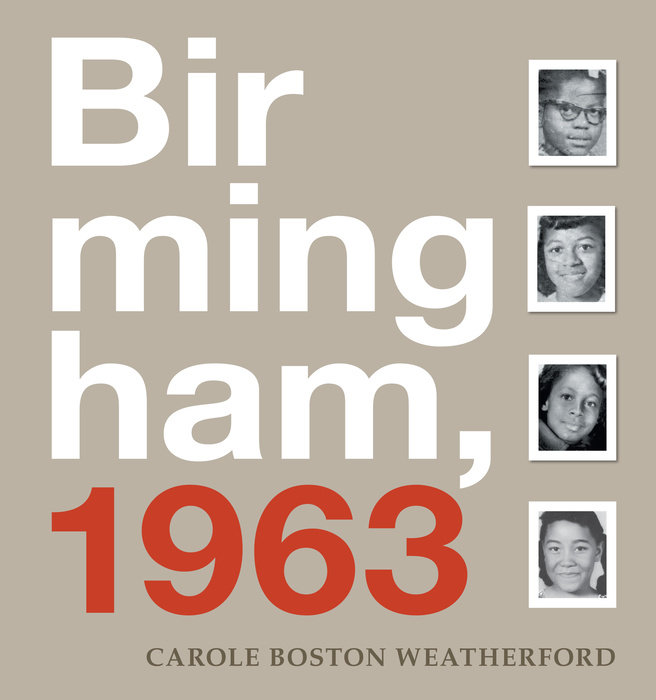
On September 15, 2963, the Ku Klux Klan bombing of Sixteenth Street Baptist Church killed four girls: Denise McNair, Addie Mae Collins, Carole Robertson and Cynthia Wesley. Birmingham, 1963 is an elegy to the girls whose lives were cut short.
In this work of historical fiction, an unnamed narrator is marking her tenth birthday. Sadly, that milestone is marred by violence. The book’s longer opening poem precedes four short “In Memoriam” poems–incantations, spotlighting the four girls’ pastimes, personalities and passions and speculating who they might have become. In May 2013, the four girls were posthumously awarded Congressional Gold Medals.
In the 1960s, Birmingham was one of the most racially divided cities in the United States. While civil rights protesters pressed for equality and integration, the staunchest racists resorted to violence to resist change. Racists set off so many bombs in Birmingham’s Black neighborhoods that the city was nicknamed “Bombingham.” Led by the Reverend Fred Shuttlesworth, Sixteenth Street Baptist Church was the hub of the city’s Civil Rights Movement, known as the Birmingham Campaign. The Reverend Martin Luther King, Jr. was jailed after marching from the church on April 12, 1963 and would go on to write his eloquent “Letter from Birmingham Jail.” And the historic Children’s March took place on May 2, 1963 in downtown Birmingham.

The bombing of Sixteenth Street Baptist Church seared the collective conscience. The hate crime both shocked and shamed America. During the Cold War, America offered itself as a beacon of freedom and democracy. Yet, systemic racism persisted and white supremacists terrorized African-American citizens. The church bombing laid bare those moral contradictions.
In 1963, I was seven years old and had already written my first poem. At the time, my parents did not share news of the bombing with me. I grew up in Baltimore and did not experience the degree of discrimination that they did in Birmingham. In many ways, I was those girls. Like Addie Mae Collins, I drew portraits, played hopscotch and wore my hair pressed and curled. Like Cynthia Wesley, I was a mere wisp of a girl who sometimes wore dresses that my mother sewed. I sang soul music and sipped sodas with friends. Like Denise McNair, I liked dolls, made mud pies and had a childhood crush. I was a Brownie, had tea parties and hosted a neighborhood carnival for muscular dystrophy. People probably thought I’d be a real go-getter. Like Carole Robertson, I loved books, earned straight A’s and took music and dance lessons. I joined the Girl Scouts and was a member of Jack and Jill of America. I too hoped to make my mark. We are both Caroles with an “e.”
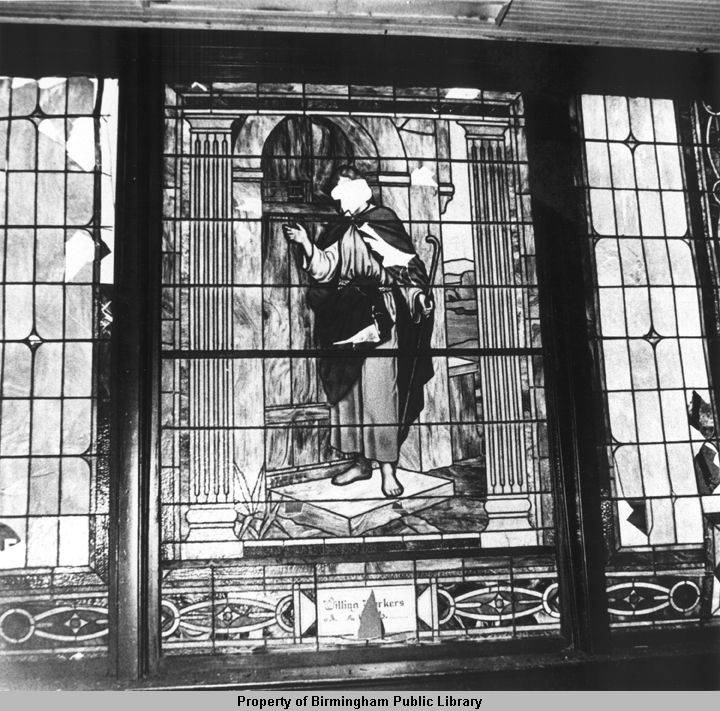
In researching the Birmingham, 1963, I was surprised that a stained glass window of Jesus almost survived the blast intact.
10:22 a.m. The clock stopped, and Jesus’ face
Was blown out of the only stained glass window
Left standing—the one where He stands at the door.
How ironic that Jesus was left faceless—as if He couldn’t bear to witness the violence.
At the four girls’ funeral, Dr. King delivered the eulogy. He called them “martyred heroines of a holy crusade for freedom and human dignity.”
The holy crusade continues.
Discover more from children's books by the weatherfords
Subscribe to get the latest posts sent to your email.
